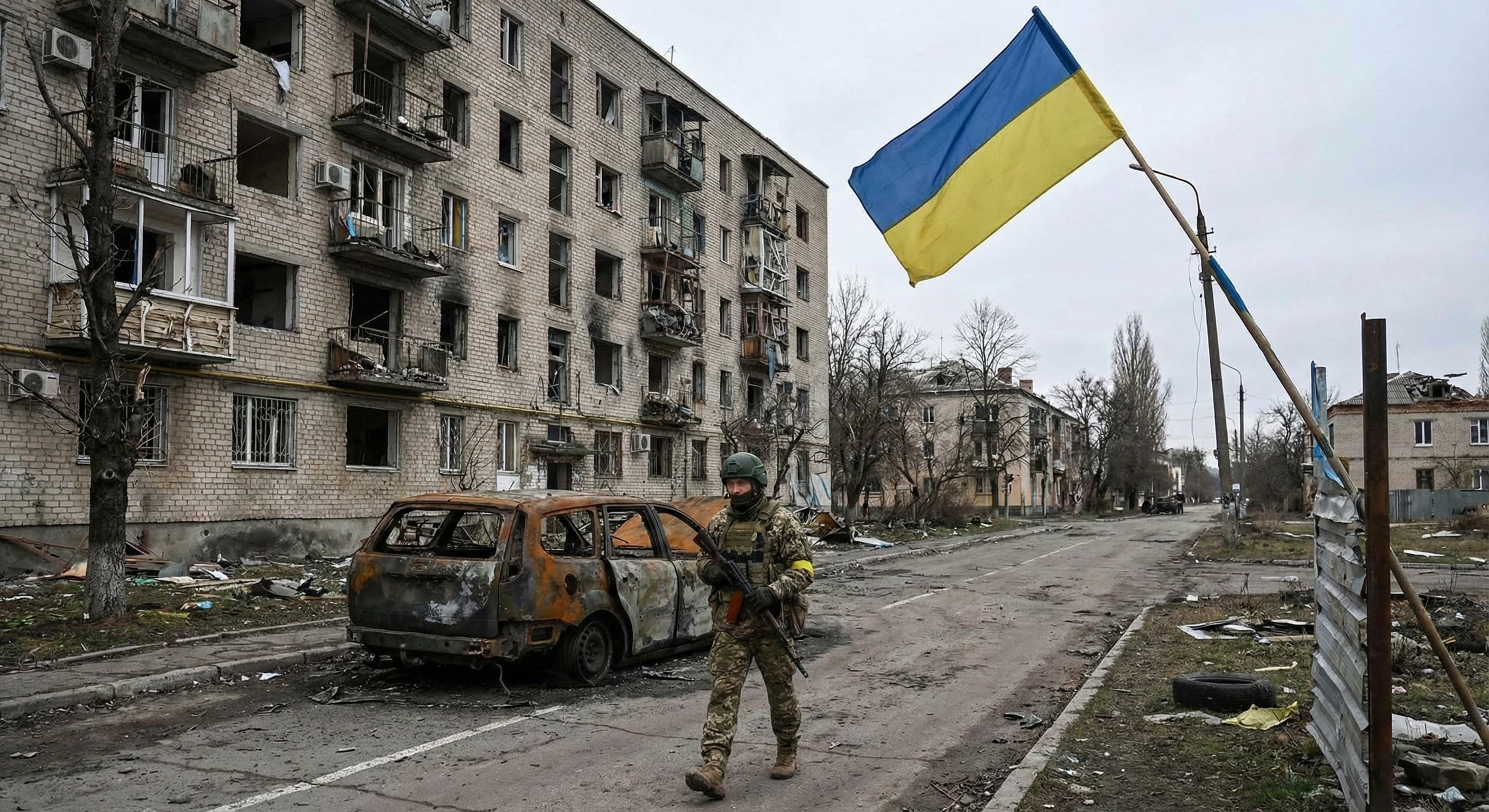
Russia-Ukraine War & Peace Talks: A Glimmer of Hope Amidst Ongoing Conflict
Alex
Editor in Chief
The protracted conflict between Russia and Ukraine continues to cast a long shadow over global geopolitics, yet recent diplomatic overtures suggest a renewed, albeit fragile, push towards a negotiated settlement. As the war enters a critical phase, the focus intensifies on the intricate dance of Russia-Ukraine War & Peace Talks, with international actors striving to bridge seemingly irreconcilable differences. The path to peace remains fraught with challenges, but the latest developments offer a glimpse into potential frameworks for resolution and the complex web of international mediation efforts for Ukraine war resolution.
The Latest Chapter in Peace Diplomacy: The US-Ukraine Joint Plan
In a significant development, Washington and Kyiv have reportedly moved closer to a jointly agreed 20-point peace plan designed to end the devastating war. This revised proposal represents a streamlined version of an earlier 28-point US draft, which had faced criticism for appearing to favor Moscow's interests. The current iteration, forged through intense discussions between Ukrainian and US negotiating teams, reflects a concerted effort to craft a framework more acceptable to Kyiv.
A key element of this evolving plan involves a crucial concession from Ukraine: an acceptance in principle of a demilitarized zone in its eastern regions. This concession, however, comes with a firm stipulation that Russia must undertake a similar pullback of its forces. Ukrainian President Volodymyr Zelenskyy has indicated a willingness to withdraw troops from the country's eastern industrial heartland, provided Russia reciprocates. This represents a notable shift in Ukraine's stance on territorial issues, which have long been a major sticking point in Russia Ukraine peace negotiations.
Furthermore, the new plan reportedly addresses Ukraine's long-term security concerns and its aspirations regarding NATO membership. It includes provisions for robust security guarantees for Ukraine, designed to mirror the mutual-defense clause of NATO's Article 5. In exchange, Ukraine would reportedly renounce its ambition to join the NATO military alliance. A three-party security guarantee draft involving Ukraine, the United States, and Europe has been developed, alongside a bilateral security agreement between Ukraine and the US. These proposed guarantees are envisioned to be legally binding, potentially requiring a vote by the US Congress.
Navigating the Impasse: Russia's Stance and Key Demands
While the US and Ukraine have made strides in formulating a joint plan, Moscow's response remains a critical unknown. Details of the proposal have been conveyed to Russian President Vladimir Putin via his envoy, Kirill Dmitriev, who reportedly briefed Putin on his recent talks with Trump's envoys in Miami. The Kremlin is currently formulating its official response and has refrained from immediate public commentary.
President Putin has previously outlined his conditions for peace, which include Ukraine ceding approximately 5,000 square kilometers of the Donbas region that it still controls, and an official renunciation by Kyiv of its intention to join NATO. However, analysts suggest that Russia is unlikely to readily accept the current US-Ukraine peace plan, believing it can achieve more by continuing the war. Moscow has also voiced criticism of European and Ukrainian attempts to amend earlier US proposals, arguing that such tweaks do not enhance the prospects for lasting peace. The fundamental disagreements over Ukraine's sovereignty and territorial integrity versus Russia's demands for control over occupied territories remain significant obstacles. The potential establishment of a demilitarized "free economic zone" in Donbas also raises complex questions about its administration and control, further complicating negotiations.
Interestingly, recent polls within Russia, conducted by the state-run VTsIOM, indicate a growing public sentiment for an end to the conflict. A majority of Russians (55%) reportedly expect the war to conclude in 2026, with 70% linking their optimism for the new year to the conflict's resolution. Independent polling further suggests that two-thirds of Russians now support peace talks, marking the highest level since the war began. This public sentiment could signal the Kremlin's potential need to gauge domestic readiness for a negotiated settlement.
International Mediation Efforts: A Global Pursuit of Resolution
Beyond the direct US-Ukraine-Russia channels, a variety of international actors have been actively engaged in international mediation efforts for Ukraine war resolution. These efforts underscore the global desire to de-escalate the conflict and find a diplomatic off-ramp.
Turkey, leveraging its unique position as a NATO member with strong ties to both Russia and Ukraine, has emerged as a prominent mediator. Ankara has hosted significant diplomatic meetings, including those that facilitated prisoner exchanges, and continues to maintain the "Istanbul Process" as one of the few active diplomatic channels.
Saudi Arabia has also asserted its role as a diplomatic alternative, hosting Ukrainian President Zelenskyy and engaging in discussions with both sides. Riyadh's pragmatic approach to international relations has seen it host a Saudi-Russian Investment Forum, further highlighting its efforts to maintain dialogue.
China, while emphasizing its objective and impartial stance, has focused on encouraging dialogue and addressing the root causes of the conflict. Beijing's approach aims to foster a long-term peace framework and involves coordinating with regional bodies like ASEAN. However, some analyses suggest China's efforts contrast with what is perceived as the US's more transactional mediation.
Potential Outcomes: From Ceasefire to Frozen Conflict
The potential outcomes of Russia Ukraine peace negotiations are varied and complex, ranging from a comprehensive peace treaty to a prolonged "frozen conflict." Experts suggest that a realistic "best outcome" might involve a ceasefire along the current lines of contact, monitored by international entities, coupled with a firm Western commitment to Ukraine's sovereignty. This scenario, however, would be contingent on Ukraine refraining from attempts to alter the status quo by force.
A more challenging, yet plausible, outcome is the emergence of a "frozen conflict." This scenario envisions the war ending without a definitive political resolution, with contested borders hardening into a militarized frontier. In such a situation, intermittent flare-ups of violence could replace large-scale offensives, necessitating continuous international mediation to prevent uncontrolled escalation. For Ukraine, a frozen conflict would carry significant strategic costs, including the potential loss of territorial integrity and incomplete sovereignty restoration. The long-term viability of such a demarcation line would heavily rely on Ukraine's own border security and credible, Western-backed deterrence to prevent further Russian aggression. Without strong Western guarantees, particularly from the US, a frozen conflict could remain unstable and vulnerable to renewed coercion.
The Battlefield Reality and Public Sentiment
The diplomatic efforts unfold against a backdrop of continued military engagements. Throughout 2025, Russian forces have made incremental territorial gains, advancing approximately 176 square miles per month up to November, albeit at a significant cost in casualties. Reports suggest that Ukraine's power grid has been severely impacted by Russian strikes, pushing it to the brink. The White House has reportedly suggested that Ukraine is likely to lose the remaining 22% of Donetsk province, including strategic cities like Kramatorsk and Sloviansk. This ongoing military pressure undoubtedly influences the urgency and parameters of peace negotiations.
Conclusion: A Precarious Path Towards Lasting Peace
The current landscape of Russia-Ukraine War & Peace Talks is characterized by a delicate balance of diplomatic progress, entrenched disagreements, and the harsh realities of the battlefield. The emergence of a US-Ukraine joint peace plan, with its proposed demilitarized zone and security guarantees, represents a tangible step forward in finding common ground. However, the ultimate success hinges on Moscow's willingness to engage constructively and compromise on its maximalist demands.
The continued efforts of international mediators, from Turkey to Saudi Arabia and China, underscore the global imperative to bring an end to the conflict. While the potential outcomes of Russia Ukraine peace negotiations range from a hard-won peace to a precarious frozen conflict, the sustained diplomatic engagement, coupled with evolving public sentiment within Russia, offers a glimmer of hope. The path to lasting peace in Ukraine remains arduous, requiring unwavering commitment from all parties to overcome the profound challenges and forge a future free from conflict.
About Alex
Alex is a dedicated contributor to AmericanPulse, focusing on global and modern American life. They have over 5 years of experience covering the US market.