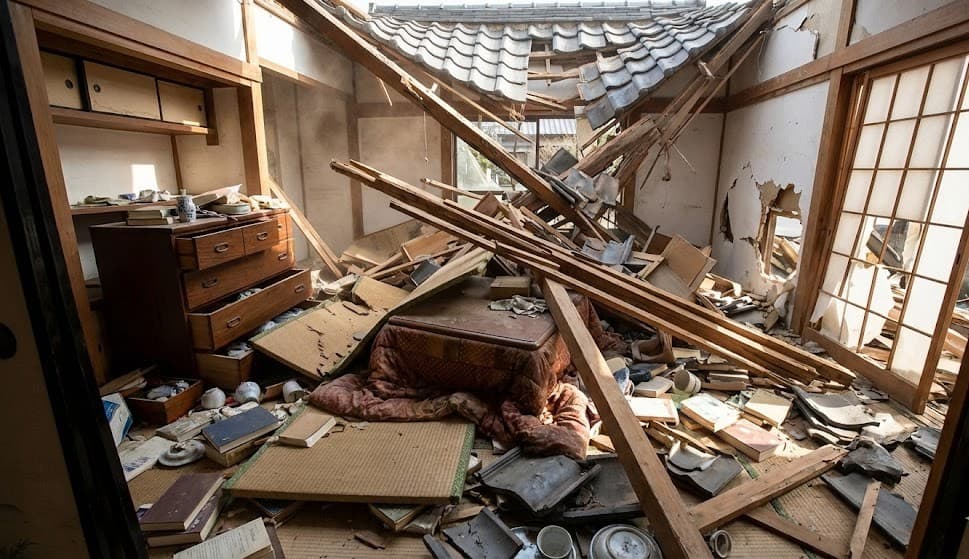
Why Japan Trembles: Unraveling the Enigma of Its Frequent Earthquakes
Alex
Editor in Chief
Why Japan Trembles: Unraveling the Enigma of its Frequent Earthquakes
Japan, a nation renowned for its vibrant culture, technological prowess, and breathtaking landscapes, also holds the distinction of being one of the world's most seismically active regions. For centuries, its people have lived with the constant rumble of the Earth beneath their feet, a stark reminder of the powerful geological forces shaping their archipelago. But why exactly does Japan experience such a high frequency of earthquakes, many of which are capable of unleashing devastating tsunamis? The answer lies deep beneath the surface, in a complex dance of colossal tectonic plates.
The Tectonic Crucible: Japan's Geological Setting
To understand Japan's seismic intensity, we must first grasp the fundamental concept of plate tectonics. The Earth's outermost layer, the lithosphere, is broken into several colossal pieces called tectonic plates, which are constantly, albeit slowly, moving. Earthquakes occur when these plates grind past, collide with, or pull apart from each other. Japan sits at a particularly volatile intersection of these plates, making it a hotspot for seismic activity. In fact, approximately 90% of the world's earthquakes, including most of its largest, occur within the Pacific Ring of Fire, an enormous horseshoe-shaped belt of volcanoes and earthquake epicenters that encircles the Pacific Ocean, and Japan lies squarely within it.
Four Plates in Motion: A Complex Dance
Japan's unique geological predicament stems from its location at the convergence of no less than four major tectonic plates:
- The Pacific Plate: This oceanic plate is moving westward at a rate of about 8-9 cm per year and is subducting (diving beneath) the Okhotsk Plate (often considered part of the North American Plate) along the Japan Trench and the Kuril Trench. This deep subduction is responsible for many of Japan's most powerful megathrust earthquakes and tsunamis.
- The Philippine Sea Plate: This smaller oceanic plate is subducting beneath central and southwest Japan at the Sagami Trough, the Nankai Trough, and the Ryukyu Trench. The Nankai Trough, in particular, is a source of recurring megathrust earthquakes that have historically caused immense destruction along Japan's southern Pacific coast.
- The Eurasian Plate (or Amurian Plate): This continental plate forms the base of much of mainland Asia and parts of Japan.
- The North American Plate (or Okhotsk Plate): While seemingly counterintuitive for an Asian nation, parts of northern Japan, including Hokkaido and northern Honshu, are considered to be on the Okhotsk microplate, which is often treated as a part of the larger North American Plate. This plate interacts with the Pacific and Eurasian/Amurian plates.
The constant convergence and jostling among these four plates build up immense compressional stress along their boundaries. When this stress is finally released, it manifests as an earthquake. This complex configuration of plates, with multiple subduction zones, is the primary reason Japan experiences thousands of earthquakes annually, ranging from minor tremors to highly destructive events.
Types of Earthquakes in Japan
Japan experiences various types of earthquakes, each with distinct characteristics and potential impacts:
- Interplate Earthquakes (Megathrust Earthquakes): These are the most powerful and often the most destructive earthquakes, occurring at the boundaries where oceanic plates subduct beneath continental plates. The friction between the plates causes them to lock, building up stress over decades or centuries. When this stress is suddenly released, it results in a "megathrust" event. The 2011 Tohoku-Oki earthquake (magnitude 9.0), which occurred along the Japan Trench, is a prime example of such an event, causing widespread devastation and a catastrophic tsunami.
- Intraplate Earthquakes (Crustal Fault Earthquakes): These earthquakes occur within a single tectonic plate, often along pre-existing faults in the crust. While generally less powerful than megathrust earthquakes, they can be highly damaging if they occur close to densely populated areas, as seen with the 1995 Great Hanshin (Kobe) earthquake (magnitude 6.9).
- Volcanic Earthquakes: Japan's numerous volcanoes, also a consequence of plate tectonics, can trigger earthquakes as magma moves beneath the surface. These are typically shallower and smaller in magnitude but can still cause localized damage.
The Threat of Tsunamis
The close proximity of Japan's coastline to active subduction zones means that many powerful offshore earthquakes can generate devastating tsunamis. When a large earthquake occurs beneath the ocean floor, it can cause a sudden vertical displacement of the seabed, which in turn displaces a massive volume of water. This creates a series of powerful ocean waves that can travel across entire ocean basins. As these waves approach shallow coastal areas, they increase in height and can inundate vast stretches of land, causing catastrophic loss of life and property. Japan has a long and tragic history with tsunamis, with events like the 2011 Tohoku tsunami serving as a stark reminder of their destructive power.
Japan's Resilience and Preparedness
Living with such constant seismic activity has compelled Japan to become a world leader in earthquake preparedness and mitigation. The nation has implemented stringent measures to protect its population and infrastructure:
- Advanced Building Codes: Japan boasts some of the most rigorous building codes globally, requiring structures to be designed and constructed to withstand significant seismic shaking. Many buildings are engineered with seismic retrofitting to enhance their resilience.
- Earthquake Early Warning System (EEW): Japan operates one of the most effective earthquake early warning systems in the world. Utilizing a dense network of seismometers, the JMA can detect the initial, faster-traveling P-waves of an earthquake and rapidly issue warnings before the arrival of the more destructive S-waves. These alerts are broadcast via television, radio, and smartphone apps, providing crucial seconds or even minutes for people to take cover.
- Tsunami Warning System: Following an offshore earthquake, Japan's meteorological agency issues immediate tsunami warnings, urging coastal residents to evacuate to higher ground.
- Disaster Education and Drills: Regular earthquake and tsunami drills are conducted in schools, workplaces, and communities, ensuring that citizens know how to react during an emergency. Emergency kits, evacuation routes, and family communication plans are widely promoted.
Recent Seismic Activity: The December 9, 2025 Earthquake
The dynamic geological forces at play in Japan were once again underscored by a significant seismic event on December 9, 2025. A magnitude 7.5 earthquake struck off the eastern coast of Aomori, the northernmost prefecture of Japan's main island of Honshu, just south of Hokkaido. The late-night quake, occurring at approximately 11:15 p.m. local time, had a depth of around 54 km.
The shaking was strong enough to be felt as far away as Tokyo, approximately 550 km to the south. It triggered small tsunami waves, with measurements reaching up to 70 cm in coastal areas like Kuji port in Iwate Prefecture. While the damage was initially reported as modest, the earthquake caused some cracks on roads and structural damage to buildings in Aomori. The number of injured individuals rose from an initial report of 34 to 51 by December 10, with most injuries resulting from falling objects.
In a rare move, the Japan Meteorological Agency (JMA) issued a "megaquake advisory" following the event. This advisory indicated an elevated chance of a powerful, magnitude-8-plus earthquake in the same Hokkaido-Sanriku region within the next week, although the absolute probability remains low, estimated at about 1%. This warning covered 182 municipalities stretching from Hokkaido down to Chiba Prefecture, urging residents in coastal belts to remain vigilant, prepare emergency kits, and be ready to evacuate quickly if further strong shaking occurs. This advisory serves as a critical reminder of the ongoing seismic risks and the importance of preparedness in Japan.
Conclusion
Japan's position at the nexus of four major tectonic plates, within the fiery embrace of the Pacific Ring of Fire, is the undeniable reason for its extraordinary seismic activity. This geological reality presents a constant challenge, but it has also forged a nation incredibly resilient and innovative in its approach to disaster preparedness. From earthquake-resistant skyscrapers to sophisticated early warning systems and a highly informed populace, Japan continues to demonstrate how a society can coexist with the Earth's powerful, ever-shifting forces. While we may not be able to stop the Earth from trembling, understanding why it does allows us to better prepare, protect, and adapt to its profound impact.
Stay Informed, Stay Safe: If you live in or plan to visit Japan, familiarize yourself with local earthquake and tsunami protocols. Download emergency alert apps like "Safety Tips", know your evacuation routes, and always have an emergency kit ready. Your preparedness is your best defense against the unpredictable power of nature.
About Alex
Alex is a dedicated contributor to AmericanPulse, focusing on global and modern American life. They have over 5 years of experience covering the US market.